Freckles sprinkled across the nose and cheeks of a precocious child look adorably cute, but what if you have a “freckle” in your eye? Well, don’t panic – in most cases, eye freckles are harmless.
In rare cases, however, some specific types of eye freckles can turn cancerous. Since February is National Cancer Prevention Month, let’s explore the facts about eye freckles, what they are, and how they may affect your eye health.
What is an Eye Nevus (Eye Freckle)
Optometrists call these colored growths or spots on or in your eye a nevus (NEE-vus) – another word for a mole. The nevus or nevi (if more than one) forms when melanin-producing cells called melanocytes clump together – just like a freckle or mole on your skin. Eye freckles can be different colors and sizes. They can be fairly noticeable or difficult to spot, depending on where they occur in the eye.
In some cases, people are born with eye freckles; that type is rarely a cause for concern.
Eye freckles that form later in life are usually harmless but are of the type that could be more likely to develop into a cancer called ocular melanoma.
There is a correlation between ultraviolet (UV) light exposure and the risk of formation of eye freckles. Your lifetime exposure to UV rays from the sun is thought to be a contributing factor to eye cancers. So, wear your sunglasses every time you go outside – yes, even in the winter.
3 Types of Nevi
There are three kinds of eye freckles (nevi). Their location determines the type.
- When they occur in the iris, the colored part of the eye, they are termed an iris nevus.
- When they form in the sclera, the white part of the eye, they are called a conjunctival nevus. Both of these types can be seen by the naked eye and are typically benign.
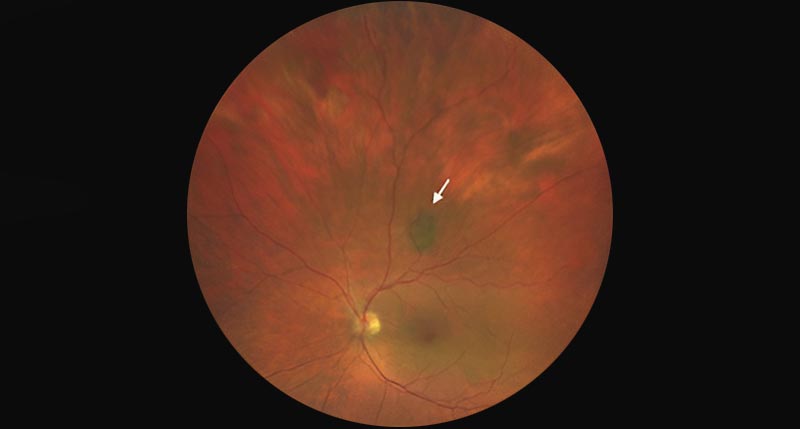
- The third type is the choroid nevus. It forms in the middle or the back of the eye. This type of nevus is most likely to be ocular cancer, especially if it is 2mm or greater in size and raised or thickened. A choroidal nevus is only visible to your optometrist during a comprehensive eye exam — which is just one of many very good reasons to have an annual eye exam. Although rare, this type of eye cancer occurs at the rate of 20 cases per 1 million adults over age 50 — which is approximately 5% of all melanoma cases.
If a nevus is malignant, there is a greater chance that it will affect your vision as it grows. Ocular melanoma may require surgery, radiation or laser surgery, but the majority of eye freckles and nevi require no treatment at all – only regular monitoring by your optometrist to watch for any growth or change.
What Nevus Symptoms Should I Watch For?
The vast majority of nevi are not cancerous. We see multiple patients each week with visible nevi on either the iris or sclera. We also see patients with nevi that are only visible during an eye exam.
Following are the symptoms that indicate a nevi is changing and may require treatment:
- A visible freckle that increases in size or color over time
- Flashing/flickering lights or discomfort in one eye
- Change in pupil shape
- A change in the way the eye moves
- A reduction in peripheral vision in one eye
- Blurred or distorted vision in one eye
- Eye pain
Take Steps to Protect Your Vision
There are lifestyle choices that can help reduce your risk for developing certain types of eye cancers, These same habits can also help to protect your vision as you age. We recommend that you:
- Protect your eyes by wearing sunglasses with lenses that have 100% UV protection
- Wear a wide-brimmed hat when you’re outside
- Eat a balanced, healthy diet and exercise regularly
- Stop smoking
- Limit alcohol intake
Who is at Highest Risk of Developing Eye Cancer?
Again, eye cancer is rare, but certain populations are at a higher risk, such as if you:
- Are Caucasian or have fair skin. About 1 in 8 light-skinned people have a nevus in their eye.
- Have light-colored eyes
- Have a family history of cancer
- Are over 50 years of age
- Have abnormal moles or tend to develop new moles and freckles
- Have abnormal pigmentation of the eyelid or the middle layer of the eye (uvea)
- Have one or more freckles in your eye
What Should I Do If I Have an Eye Nevus?
If your optometrist tells you that you have an eye nevus, it’s important to stay aware of the signs, symptoms, and risks associated with them. Every eye nevus should be examined and monitored by your optometrist regularly. Just like a mole on your skin, an eye nevus can grow or change over time, and such changes could indicate it may develop into cancer.
An annual comprehensive dilated eye exam with your optometrist is the very best way to keep your eyes healthy for a lifetime of good vision. Call our offices today and schedule yours!